Green Eutectogel with Antibacterial-Sensing Integration for Infected Wound TreatmentIssuing time:2025-01-14 16:55 Lingzhang Meng, Hui Sun, Hongbo Zhang, Yuyue Zhang, Chunmei Ding, Xinyuan Xu and Jianshu Lee
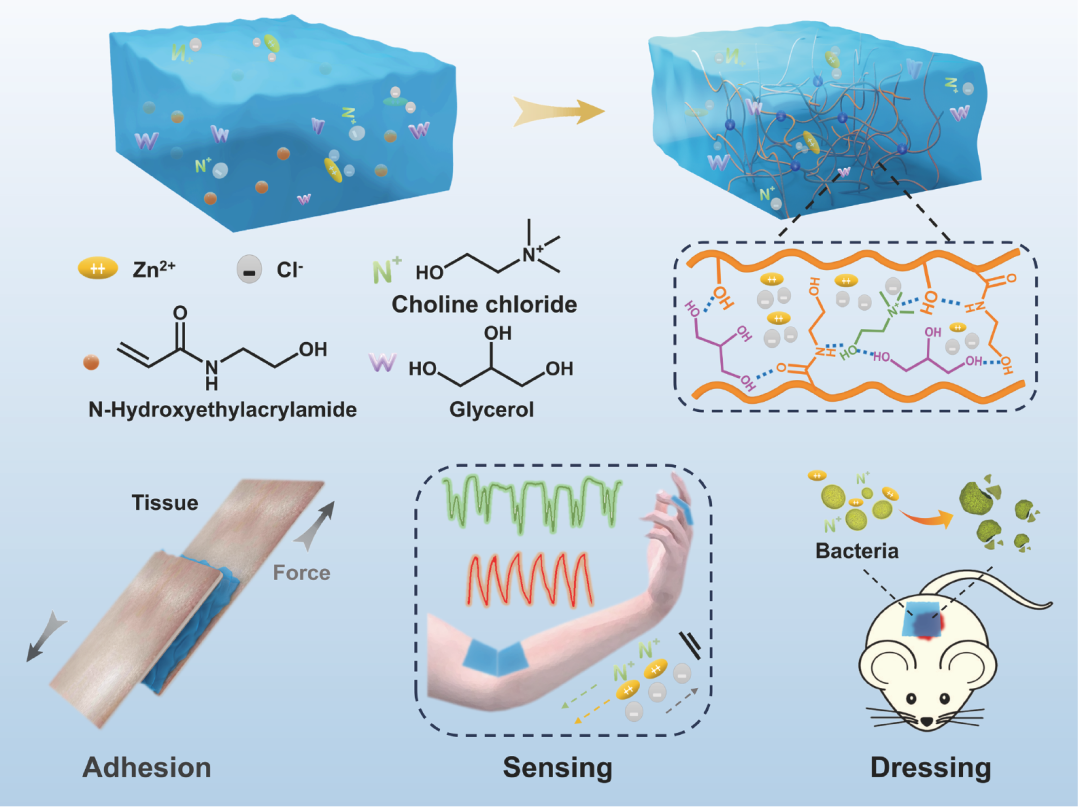
Figure 1. Illustration of fabrication and functional characterization of eutectogels. Abstract Hydrogels, a class of highly hydrated materials mimicking the extracellular matrix, offer tunable mechanical properties and serve as versatile platforms for functionalization, which have been used for wound dressing to prevent infection and fluid loss. However, their inherent moisture evaporation hampers both storage stability and service life in practical applications. Deep eutectic solvents (DESs), as a category of eco-friendly solvents, exhibit low vapor pressure, good conductivity, biodegradability, non-flammability, and affordability. Eutectogels using DESs as a solvent not only retain the mechanical strength and functionality of hydrogel systems but also circumvent the limitations imposed by water evaporation in conventional hydrogels, which presents a promising direction and material framework for more personalized and efficacious wound management strategies. In this study, we have successfully synthesized a novel ternary deep eutectic solvent composed of glycerol, zinc chloride, and choline chloride, and subsequently incorporated polymerizable double bonds to fabricate an eco-friendly, antimicrobial-sensing eutectogel. This gel possesses a unique combination of high mechanical strength, universal adhesion capabilities, persistent bactericidal activity, superior sensing properties, and excellent biocompatibility. Its potential application as a wound dressing was explored, with results demonstrating the ability of eutectogel to accelerate wound healing and prevent bacterial colonization at the wound site. These findings provide a solid theoretical foundation and a promising material platform for the development of next-generation intelligent wound dressings.
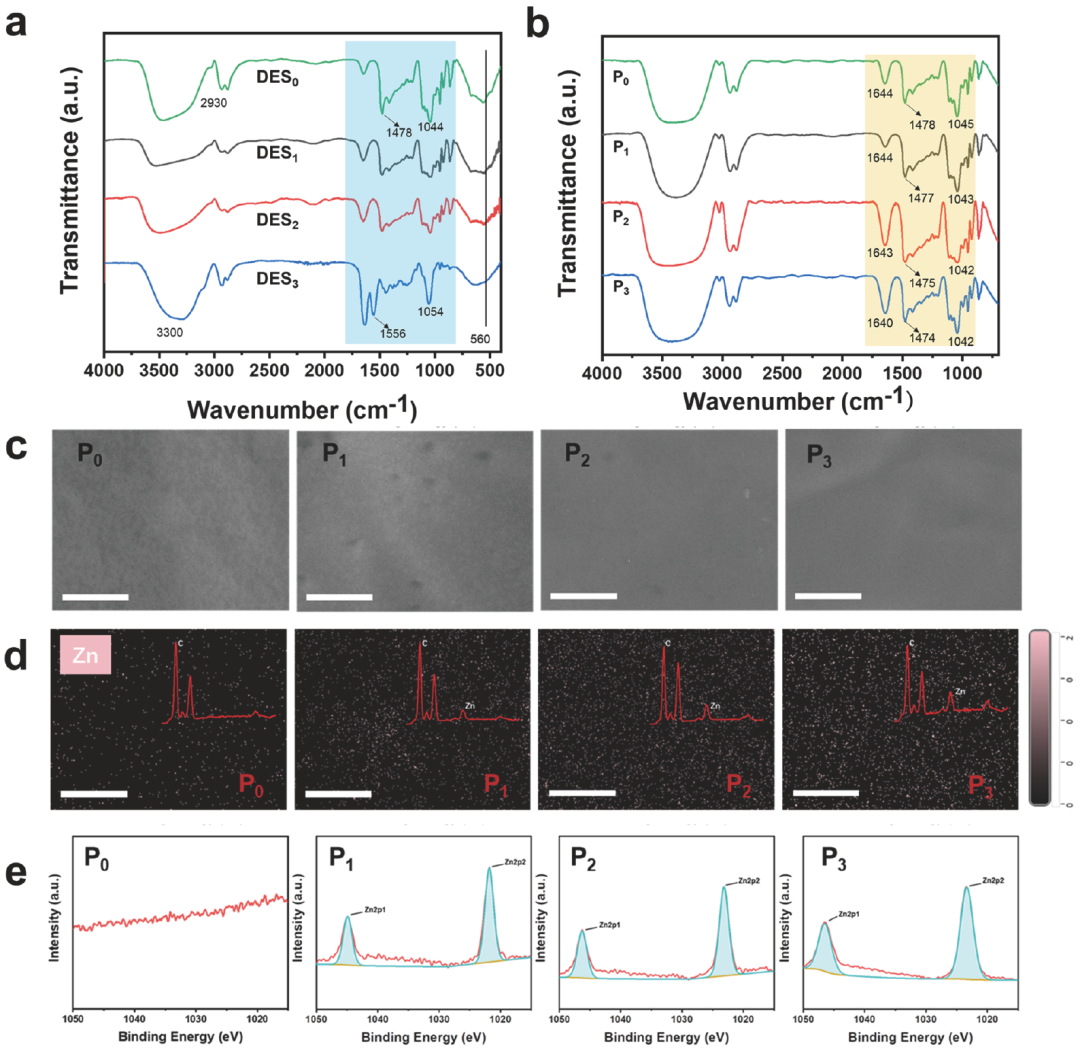
Figure 2. FTIR spectra of (a) four deep eutectic solvents and (b) four eutectogels. (c) Scanning electron microscopy (SEM) images of cross-sections in eutectogels (scale bar: 10?μm). (d) Elemental mapping analysis of cross-sections in eutectogels (scale bar: 10?μm). (e) High-resolution X-ray photoelectron spectroscopy (XPS) analysis of Zn 2p in four eutectogels. Recently, Professor Jianshu Lee and Associate Researcher Xinyuan Xu from Sichuan University published a research paper in Science China Materials, successfully synthesizing a new type of ternary deep eutectoid solvent, composed of glycerol, zinc chloride and choline chloride, and introducing polymerization reactive double bonds to prepare an environmentally friendly and antibacterial green eutectoid gel.
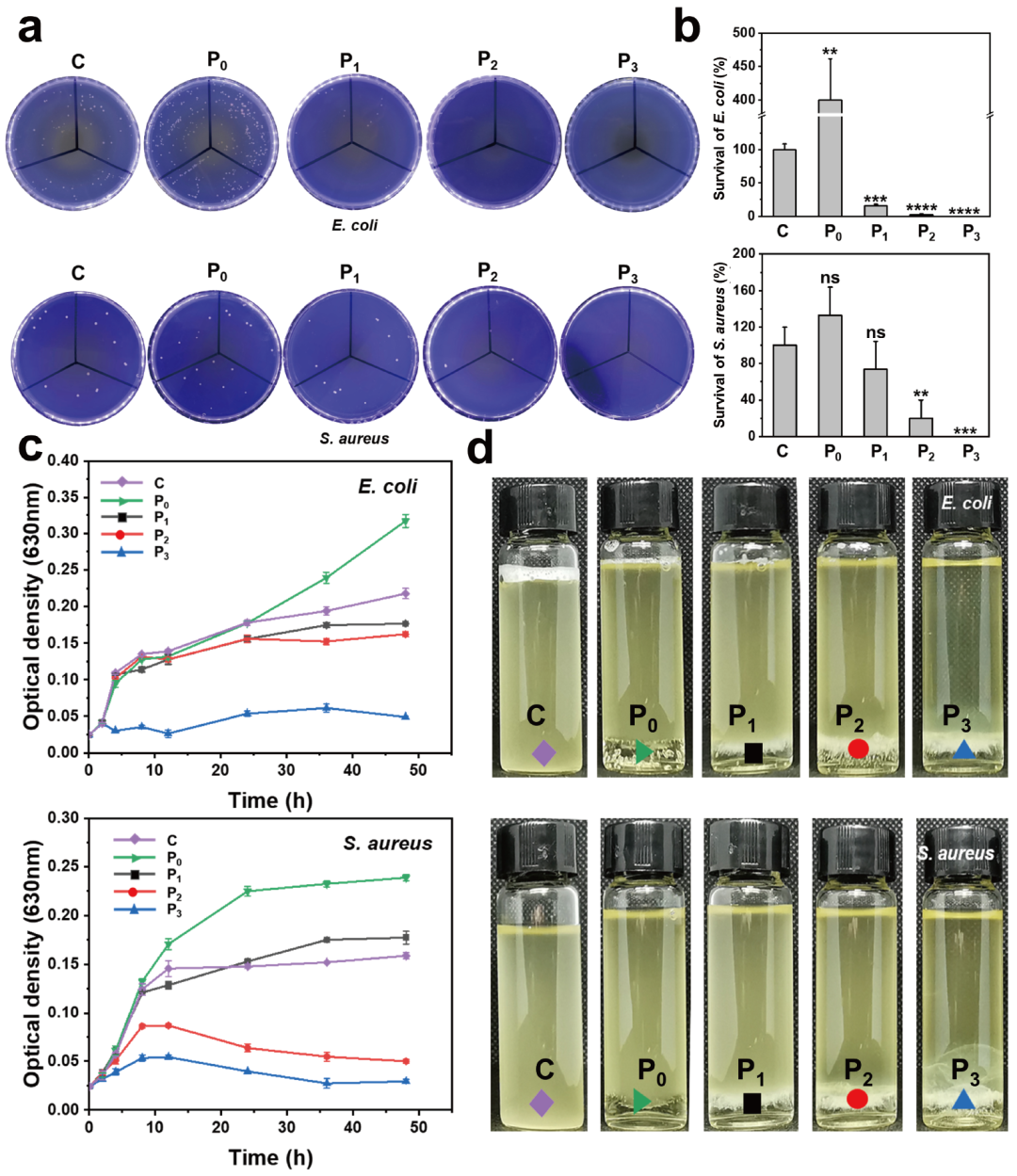
Figure 3. (a) Photographs of colony forming unit (CFU) enumeration after a 24-h co-culture of eutectogels with bacteria. (b) Quantitative analysis of bacterial viability of eutectogels. (c) Optical density (OD) curve of the bacterial suspension with eutectogels. (d) Photographs of culture bottles after a 24-h co-culture of eutectogels with bacteria. Note: *p < 0.05, **p < 0.01, ***p < 0.001. ns: not significant. Key points of this article 1) This gel has unique characteristics such as high mechanical strength, extensive adhesion ability, long-lasting bactericidal activity, excellent sensing performance and good biocompatibility. 2) The application of this gel as a wound dressing was further explored, and the results showed that this eutectoid gel has the ability to accelerate wound healing and prevent bacteria from colonizing at the wound site.
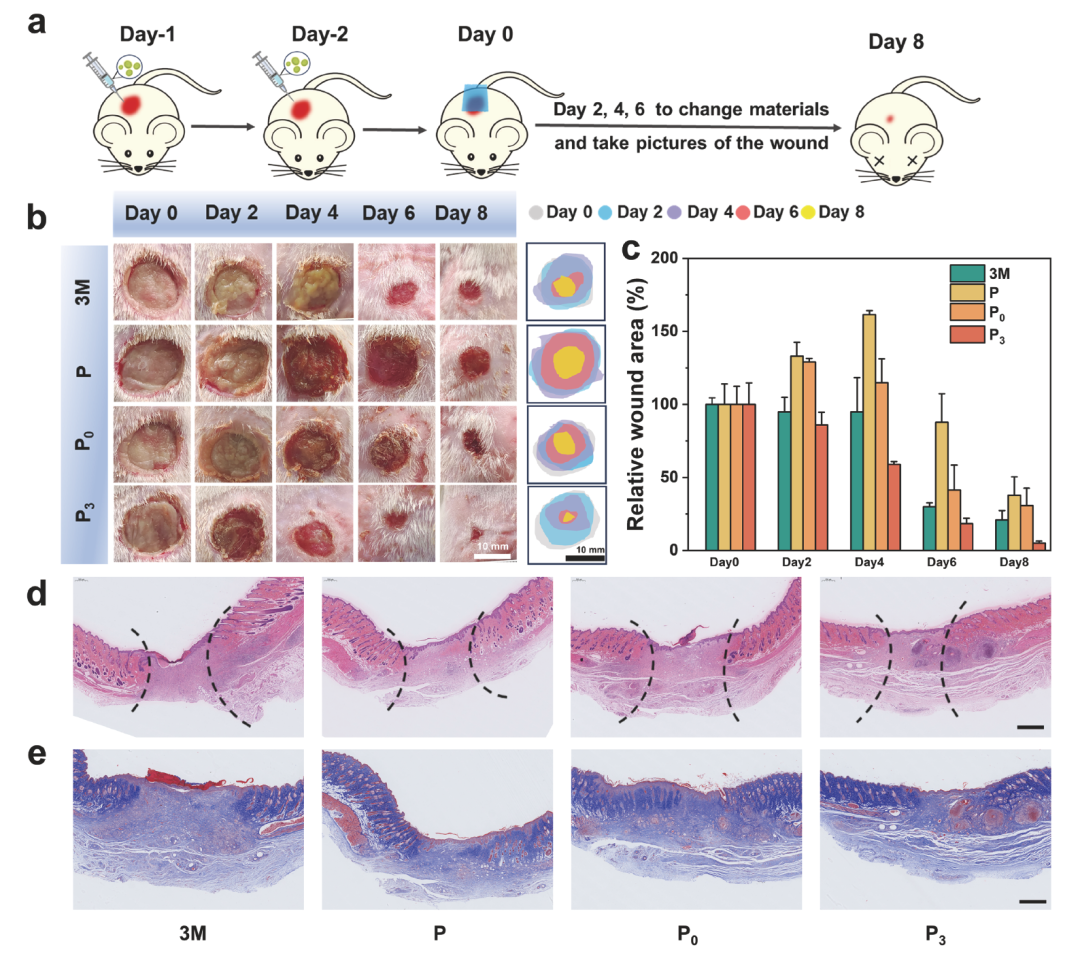
Figure 4. (a) Schematic diagram illustrating bacterial infection and treatment in rat’s model. (b) Photographs of the infected wounds at different time points. (c) Quantitative analysis of the wound areas at different time points. (d) H&E-stained histological images of the wound site in rats (scale bar: 1?mm). (e) MTC-stained histological images of the wound site in rats (scale bar: 1?mm). Resource: https://doi.org/10.1007/s40843-024-3087-4 |